What is al-Fiqh?
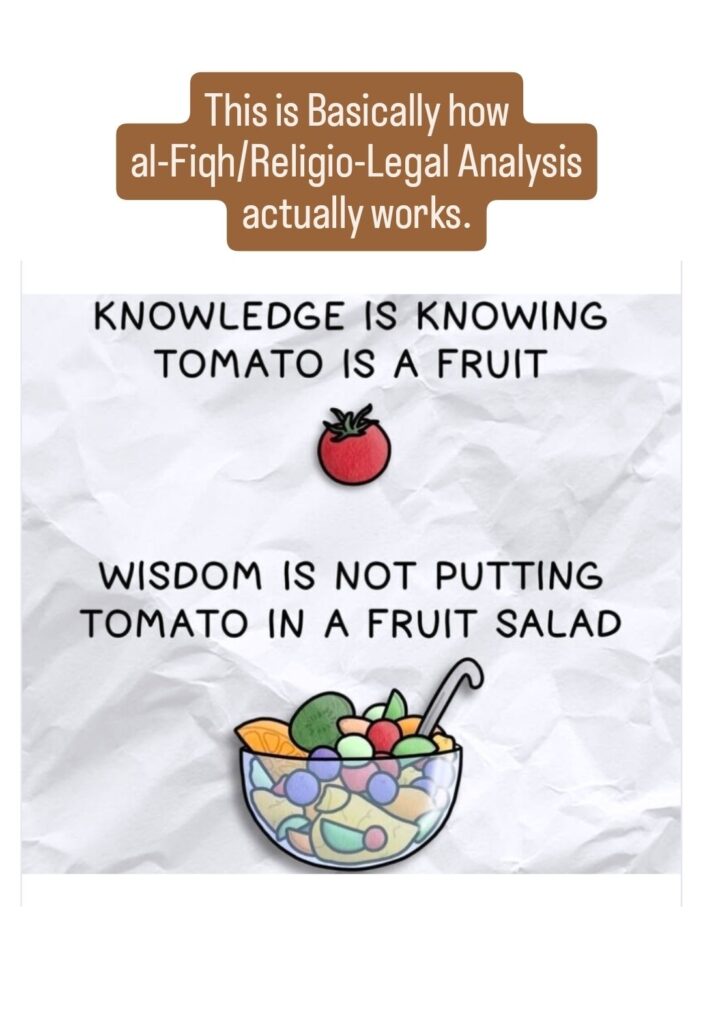
Fiqh: from the Arabic-Verb, “Faqaha”, meaning “To understand, explain/interpret, analyze, categorize/compartmentalize, etc.”.
(Lisān-ul-`Arab: Lexicon of the Arabic-Language, ibn-Manzhūr)
In the Case of Revelatory-Texts, it refers specifically to the Analysis/Interpretation of any/all Islāmic-Sources, such as al-Qur’ān/The Qur’ān, as-Sunnah/the Prophetic-Tradition of Muhammad (Peace be upon him), as well as any/all canonized/written Islāmic-Literature. The Reason as to why Fiqh is important is because it’s essential for Muslims to acquire the most sophisticated Understanding of al-Islām as humanly possible. This is due to the fact of what Allah states, “The Knowledgeable revere Allah the most.”.
(Noble-Qur’ān: Chpt.35, V.28)
This Verse thus indicates that in order to truly serve Allah: the Creator/Lord of the Universe, properly, relative to His Divine-Discretion, we must know & live what He expects from us. And, the only way to know what He expects from us is to learn what is within His Tanzīl/Revelation (which in our Modern-Era of Human-Existence happens to be): The Qur’ān & the Sunnah.
1. What are the Purposes/Objectives of Fiqh?
To simplify the essential elements of al-Islām, which may be too advance for Muslims whom aren’t Religio-Academics. Historically, as well as contemporaneously, most of the Muslim-World will never be Religio-Academics.
2. Most-Muslims will never be able to achieve any True-Level of Religio-Academia, because of so many Factors, such as:
a. Illiteracy-
Unfortunately, Great-Numbers of Muslims within the Muslim-World have been ravaged by Illiteracy: Literacy (especially within the Modern-Era) is an Essential-Element for any/all Types of Intellectual-Cultivation (Learning/Education).
b. Poverty-
In a “Perfect-World” everything would be for free. But, sadly: we live in an Imperfect-World, where basically everything has a Price, including Knowledge. And if you can’t afford it, you’re a lot less likely to obtain it. This is particularly true/honest pertaining to Islāmic-Academia. And, in a World where People lack so many Resources: who has the time to just sacrifice, to learn about al-Islām in such a Structured/Academic-Atmosphere?!!! This leaves Most-Muslims to just utilize General-Information about al-Islām which is socially-inherited by Parents, Peers, Communities/Societies they’ve grown-up within, etc. But, the problem is that without an Individual being able to cross-reference what they’ve learned/been taught, it’s very difficult to decipher what’s Authentic-Information as opposed to what’s Deficient-Information and/or Fabricated-Information.
c. Political-Unrest-
Many-Muslims are victims of (external/internal) Politically-Chaotic Agendas & Circumstances, which they as individuals have absolutely no say or control over. And as such: they’re subjected to being displaced, forced to conform to a Refugee’s-Lifestyle, forced to constantly be under Threat, forced to engage in Warfare, etc. So, under these Types of Circumstances, being Academically-Sound via Islāmic-Academia takes a huge Back-Seat by default, because their very Survival as Humans are constantly hanging in the Balance.
3. What is ash-Sharī`ah and what are the Purposes/Objectives of ash-Shari`ah?
ash-Sharī`ah: from the Verb “Shara`a” meaning “To pave (a Path)”…“A clear, wide/broad Path leading towards Water.”.(Lisān-ul-`Arab) Water represents Purity, in terms of consolidating a pristine Relationship between an Individual & their Creator/Lord. In other words: Sharī`ah/Islāmic-Law provides us with this Widened-Path, to make our navigation through Life easier, and thus making it easier to perfect our Relationship with Allah.
4. The Maqāsid/Objectives of ash-Sharī`ah are to (at all times) preserve the following:
a. al-Islām/Religion-
Regarding Islam as the only, most supreme, Form of Guidance: providing an-Najiyyah/Salvation for Humanity, to be saved from their own Egos/Desires, and from the Torment of Allah via the Hereafter, as a result of not obeying the Creator/Lord of the Universe.
(Noble-Qur’ān: Chpt.3, V.85; Chpt.51, V.56)
b. Morality/Integrity-
Ensuring that Moral-Standards are maintained within Human-Society, such as Chastity, Ethics, Character, Honesty, Kindness, Philanthropy, etc. & to avoid, abolish, any/all of the Opposites of the aforementioned.
(Noble-Qur’ān: Chpt.6, V.151)
c. Life (Wellbeing/Welfare)-
Maintaining the Sacredness of Life, Health, etc. & educating People on how to care for themselves as well as others, via Respect for Human-Life, Health, etc.
(Noble-Qur’ān: Chpt.2, V.168 & 195; Chpt.4, V.29; Chpt.5, V.32&105; Chpt.6, V.151; at-Tabarī; an-Nawawī)
d. Intellect/Education-
Cultivating the usage of the Mind, for the sole purpose of getting closer to Allah in obedience & to propel oneself to use Intellect to better the World.
(Noble-Qur’ān: Chpt.3, V.190; al-Bayhaqī)
e. Heritage/Ancestry-
Honoring & respecting one’s Origins, in terms of an-Nasb (Genealogy/Lineage, Ethnic-Background, etc.).
(Noble-Qur’ān: Chpt.33, V.5; at-Tabarī)
f. Property/Possession-
Ensuring that the possessions of all Peoples are protected & not encroached upon.
(Noble-Qur’ān: Chpt.6, V.151; al-Bukhārī; Muslim)
5. What are Dimensions of ash-Sharī`ah?
a. al-Qur’ān: Primary-Revelation
b. as-Sunnah/Prophetic-Tradition: Secondary-Revelation
c. al-Ijmā` (Consensus/Unanimity): Fatāwā/Rulings of Religio-Academics after Revelation ceased, as well as what: as-Salaf (the Sahābah/Companions & Generations-1&2 of the Tābi`īn/Followers) agreed upon, and also what All-Muslims historically agree upon.
d. al-Qiyās (Analysis): Based upon Condition/Circumstance, Space/Place, Time/Time-Period, People, Culture, Society, Political-Atmosphere/Governance, Economics, Education, Health, Crime, Technology, etc.
6. How do/should we consolidate al-Usūl/Islāmic-Principles with al-Furū`/Modern-Circumstances?
Well, it truly depends upon Time-Period, Circumstances, Peoples, Societies, etc.-It’s exclusively relative/subjective. But, what must be maintained is the integrity of the fundamental basic Islāmic-Principles, which have already been detailed, pertaining to what must be preserved at All-Times, under All-Conditions. Allah states, describing Themselves, “It’s They whom created all what’s within the Earth for you.”.
(Noble-Qur’ān: Chpt.2, V.29)
So, this principally teaches us, via at-Tanzīl/Revelation, that as long as something isn’t Holististic/Specifically-Mahrūm (Islāmically-Prohibited) then we’re completely free to utilize it however we want to without being wasteful of course. This is a Universal-Asl/Principle via al-Fiqh/Religio-Legal Analysis.
So, upon that, if there’s something in question to do, be used, etc.:
a. How/why is it being used?
b. Is it Mahlūl/Islāmically-Allowable vs. Mahrūm/Islāmically-Prohibited?
c. Is the Usage of it for Recreational-Use vs. Necessity?
d. Is there no other Alternative which is more Islāmically-Acceptable/less Islāmically-Prohibited?
7. Why is there such a necessity to merge Classic understandings of Islāmic-Texts with Modern Issues?
The reason why this is important for People to do is because al-Islām, from the time of Adam (Peace be upon him), to Muhammad (Peace be upon him), and even beyond, to our modern-era: al-Islām has always been flexible, permeable, adaptable, to any Time-Period, any People, any place, etc. Now, with this being said, this doesn’t mean that we as Muslims compromise basic Islāmic-Principles, such as those previously mentioned. It does mean, however, that ash-Shariī`ah has the ability to adapt according to needs, circumstances, etc.so as to make the Islāmic-Experience easier for People, to make the ability to obey Allah less complex/complicated.
8. What are some issues that need to be consolidated, relative to merging Classic-Texts with Modern-Issues?
These are so many, I may not even be able to get to all of them, as I should. However, I will attempt to address as many as Humanly-Possible. These Modern-Issues are things which I deem necessary to address, basically influencing/dominating the Muslim-World, for the past century. The issues I intend to address are in no particular order of importance or emphasis.
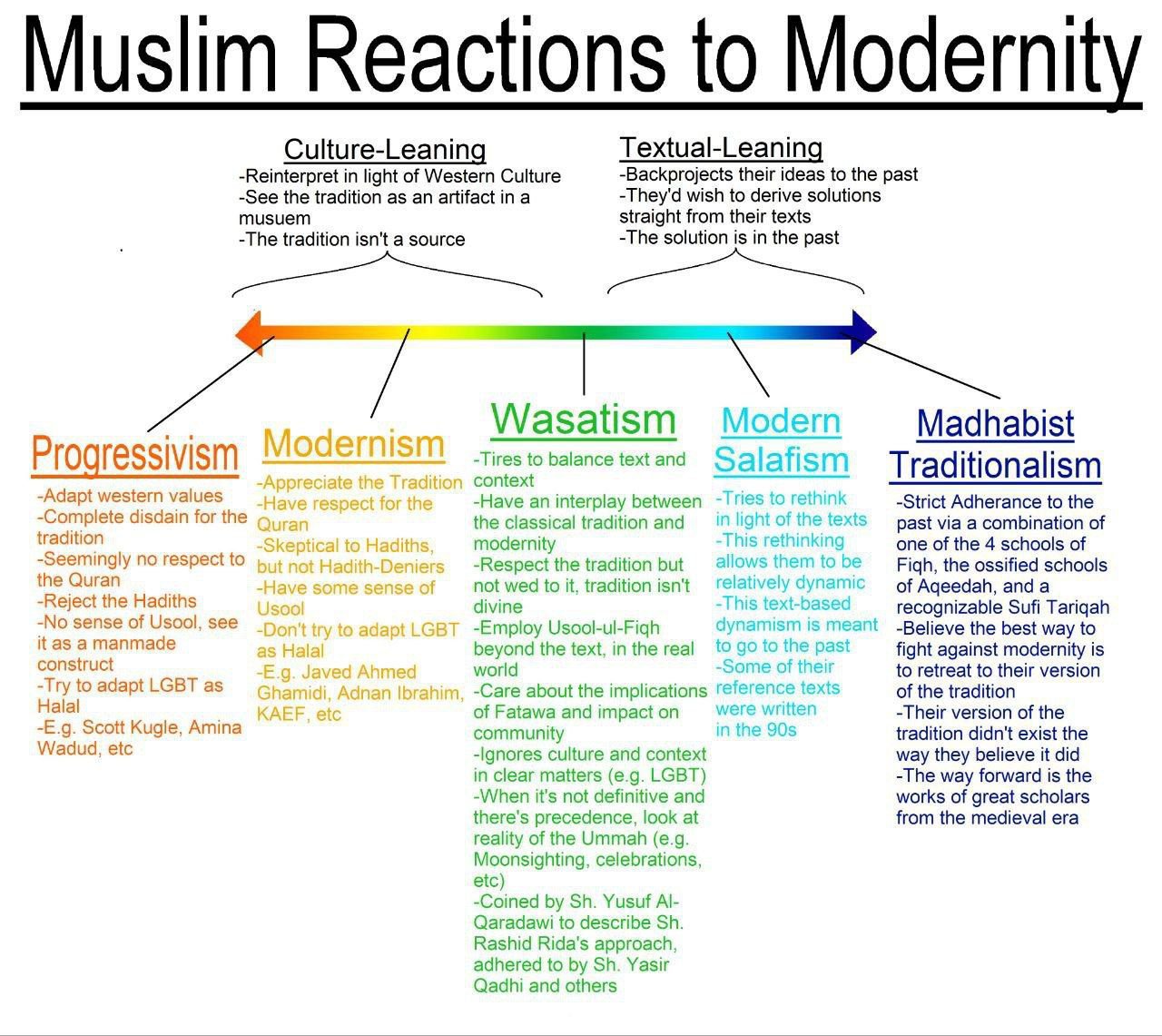
Important-Facts:
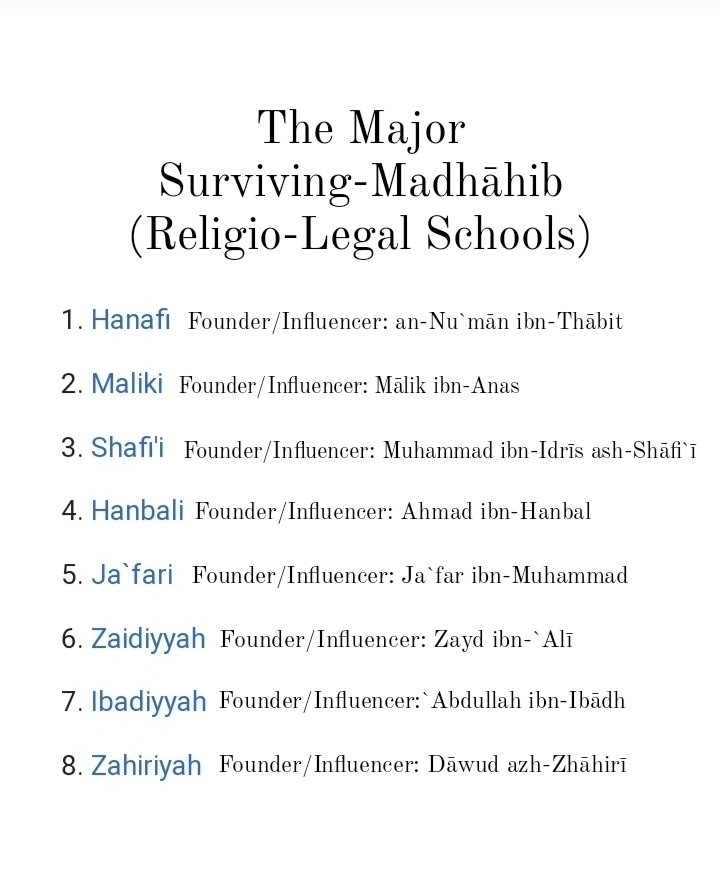
a. None of the Madhāhib/Religio-Legal Schools that we know of, how we know them to be, were ever incepted/invented by as-Sahābah/the Companions (May Allah be pleased with them altogether).
b. Each/all of these Madhāhib evolved as a Result of Needs of the Muslims, in Terms of making the Academic-Element of al-Islām categorized, compartmentalized, etc. so that Common-Muslims without any Relative-Scholarship wouldn’t have to experience the Scholastic Growing-Pains of Treasure-Hunting for Islāmic-Knowledge, so as to make it easier to access Islāmic-Sources under Specialized-Schools of Law, which in turn would labor to interpret Revelatory-Texts, relieving Common-Muslims of that Burden.
c. There were also various Religio-Political Reasons as to the formations, evolutions, of these Madhāhib. Amongst the Reasons being: the Influences/Dominanation of al-Hizbiyyah/Religio-Sectarianism, Muslim-Governments/Empiries favoring Certain-Madhāhib exclusively exclusively as per Power-Consolidation, etc.
I’ll mention 1-Example pertaining to al-Ikhtilāf (Religio-Scholastic Differing) which divides Muslims across Madhab-Lines…Dietary-Ahkām/Regulations:
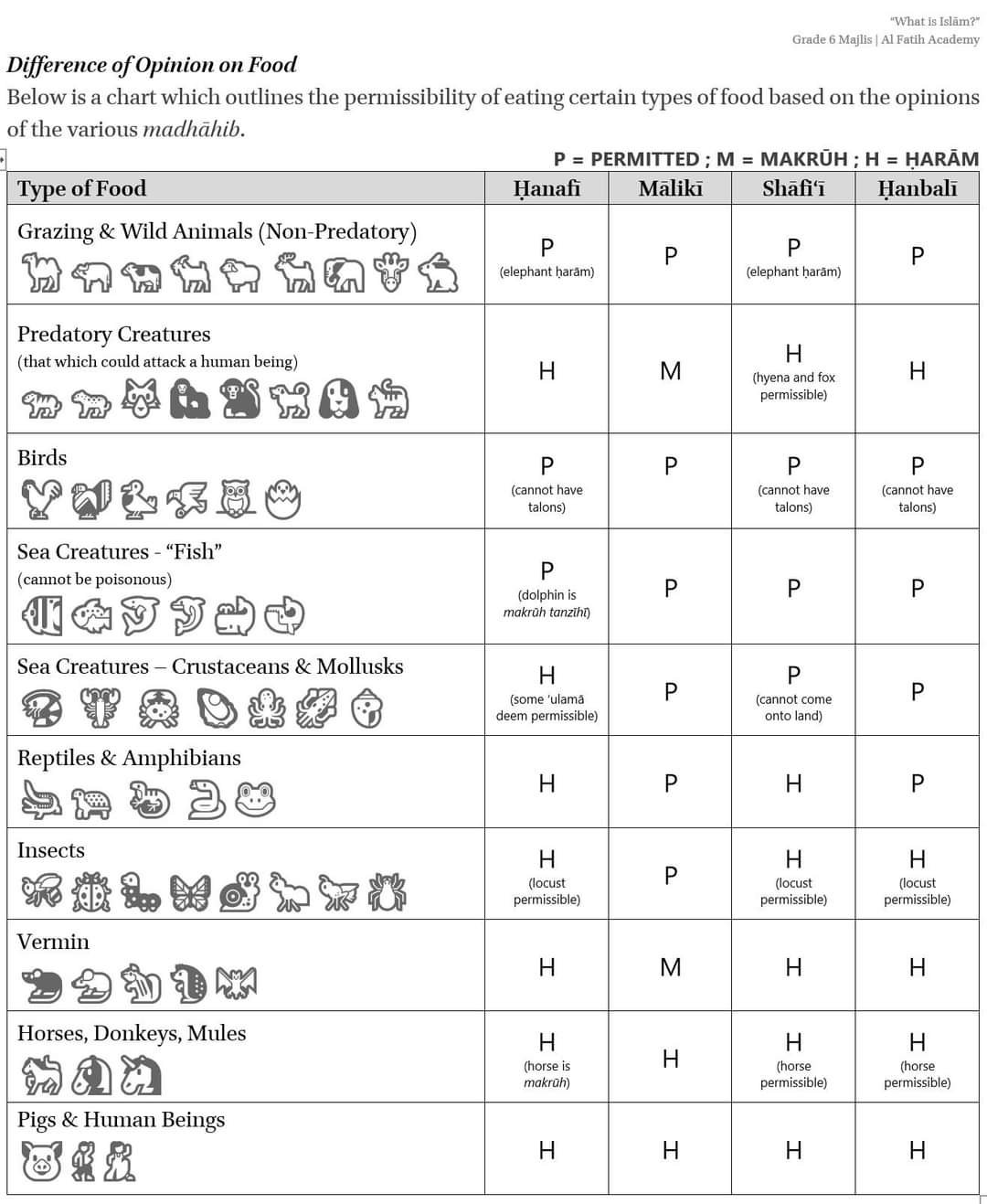
So, one may very well ask whether one must/should pick a Particular-Madhab to follow. My Response to that is each Muslim must exclusively decide that for themselves. If being under a Madhab causes your Islāmic-Journey to be easier, or if they’re not willing to take their Islāmic-Learning to the Next-Level…that’s their Choice. If one thinks/feels that they’re not in any Need to be under a Madhab, then that’s equally their Choice. And, guess what: Both-Choices are 💯% Islāmically-Valid/Acceptable, no one is justified to judge any Muslim whom decides either for themselves.
This is for the Following-Reasons:
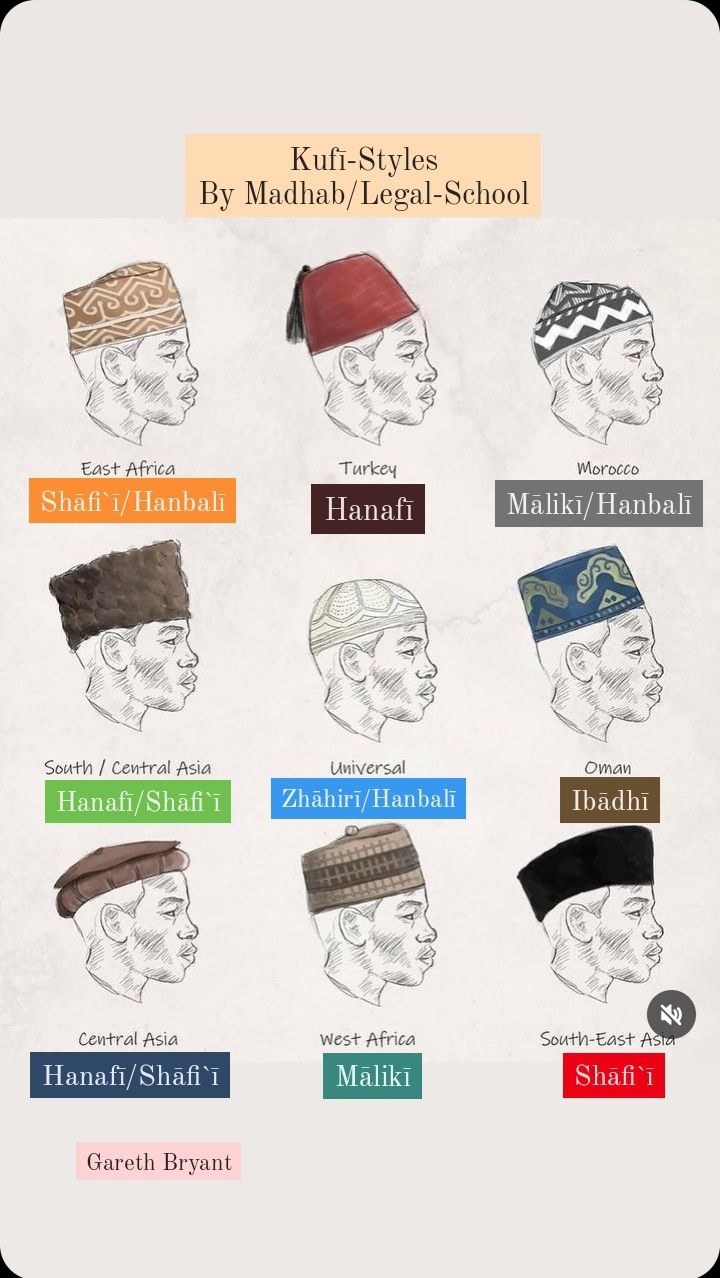
a. There’s 0 Islāmic-Mandate to be under any Madhab.
b. All of the Surviving-Madhāhib are proven to be Islāmically-Valid.
c. All of These-Madhāhib have their Strengths&Weakness, Prowess&Deficit, etc.
d. As per Muslims whom resident via Non-Muslim/Muslim-Minority Countries…clinging to an Exclusive-Madhab neither realistic nor intelligent. The Madhāhib literally have 0 Religio-Judicial Authority external of Muslim/Muslim-Majority Countries anyway. And, the Primary-Function of the Madhāhib is to establish/maintain Islāmic-Judiciary. But, if that’s not done and/or not possible then clinging to any Exclusive-Madhab is honestly quite pointless.
Gareth Bryant 1443, A.H./2022, C.E.


Leave a Reply to Maliki Baraka Cancel reply